The solver stays the product in both of these — Blue only turns what a person already knows into a starting point or a constraint.
ITEM 11PlannedNo patient data
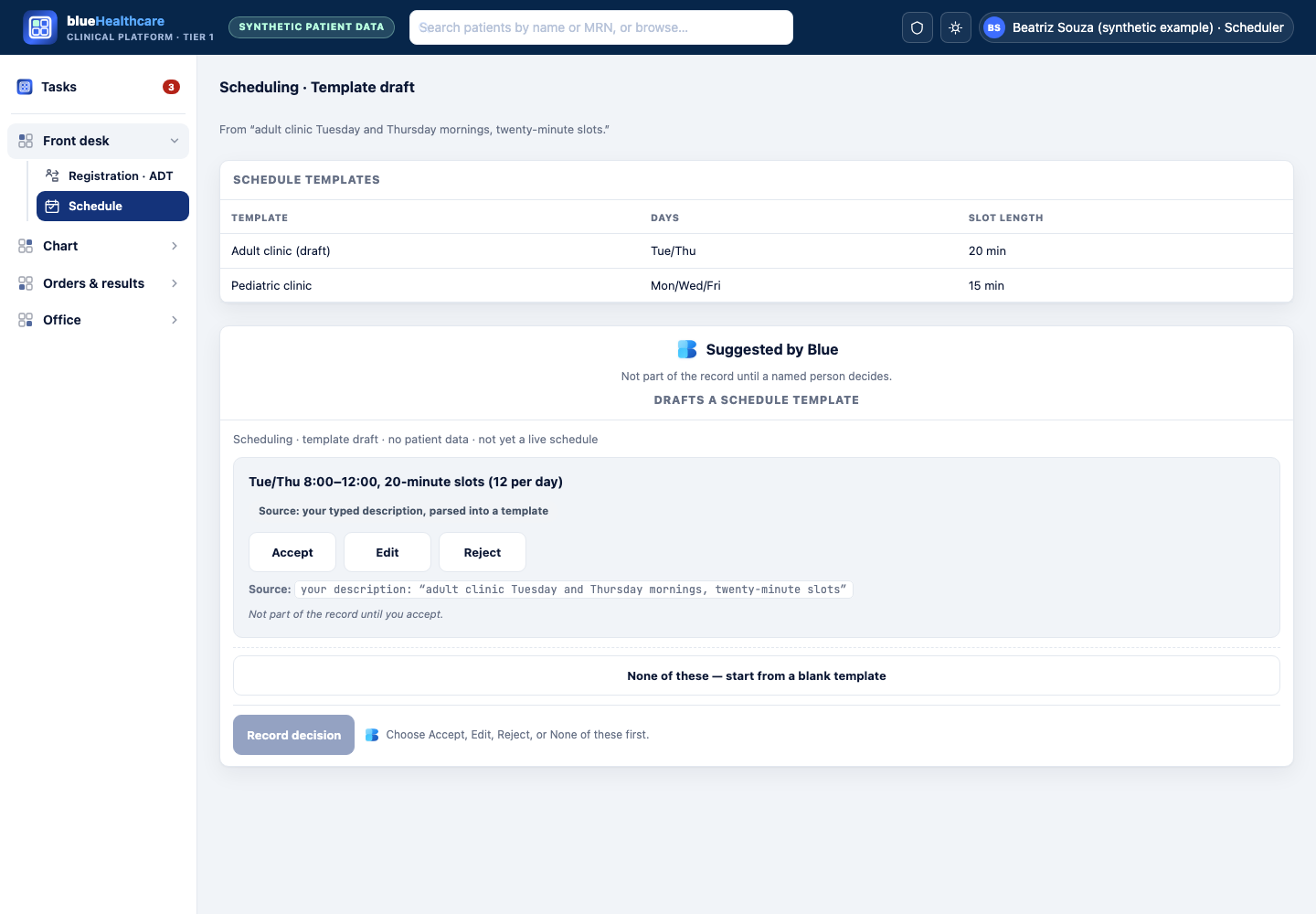
Drafts a schedule template
Turns a plain-language description of a clinic’s hours into a starting schedule template a person edits and approves — nothing books a patient until then.
Synthetic example walkthrough
Who
Beatriz Souza (synthetic example), opening a new adult-medicine clinic.
Situation
She knows she wants “adult clinic Tuesday and Thursday mornings, twenty-minute slots” but has never built a schedule template before.
Blue shows
A draft template: Tuesday and Thursday, 8:00am–12:00pm, twelve 20-minute slots each day, with a placeholder provider name.
They do
Beatriz reviews the draft, sets the real provider name, adjusts one slot length, and saves it as the clinic’s real template.
Design mockup · not built Shown inside blueHealthcare's real shell (top bar, left rail, product tokens) with synthetic data, composed from the platform's own components — not a live feature, and not a real screenshot of a shipped screen.
What it never does
Never books an actual appointment.
Never modifies a live schedule that already has patients booked on it.
ITEM 12PlannedNo patient data
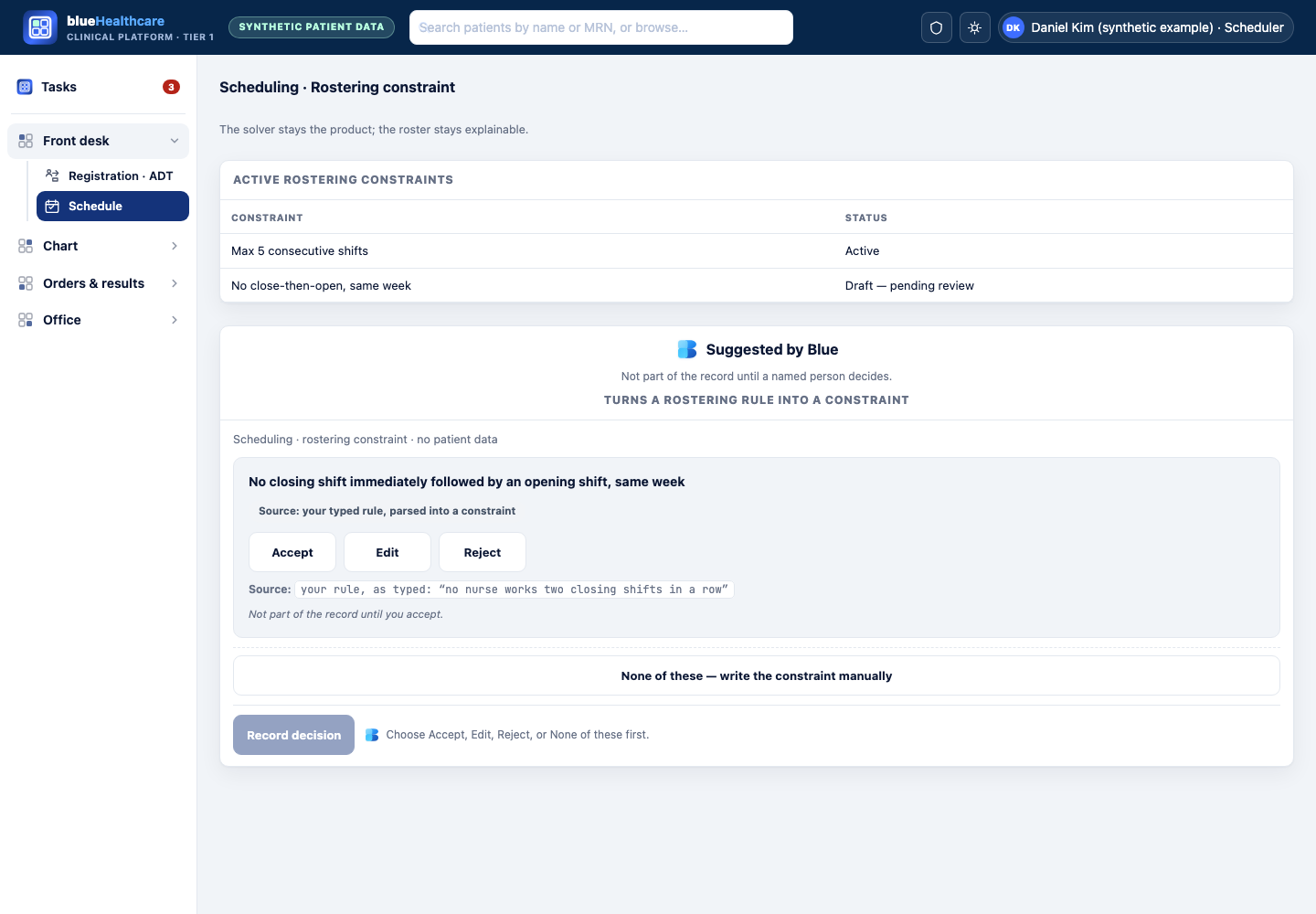
Turns a rostering rule into a constraint
Turns a manager’s plain-language staffing rule into a constraint the scheduling solver enforces, so the roster the solver produces stays explainable in the manager’s own words.
Synthetic example walkthrough
Who
Daniel Kim (synthetic example), a charge nurse manager.
Situation
He has a rule everyone follows informally — no back-to-back closing and opening shifts — that has never been written into the system.
Blue shows
A candidate constraint in the exact form the solver reads: “No staff member scheduled for a closing shift immediately followed by an opening shift, same week.”
They do
Daniel confirms the constraint matches what he meant; the solver — not Blue — then produces the actual roster honoring it.
Design mockup · not built Shown inside blueHealthcare's real shell (top bar, left rail, product tokens) with synthetic data, composed from the platform's own components — not a live feature, and not a real screenshot of a shipped screen.
What it never does
Never produces the roster itself — the deterministic solver does that.
Never overrides a constraint a manager has already approved.